





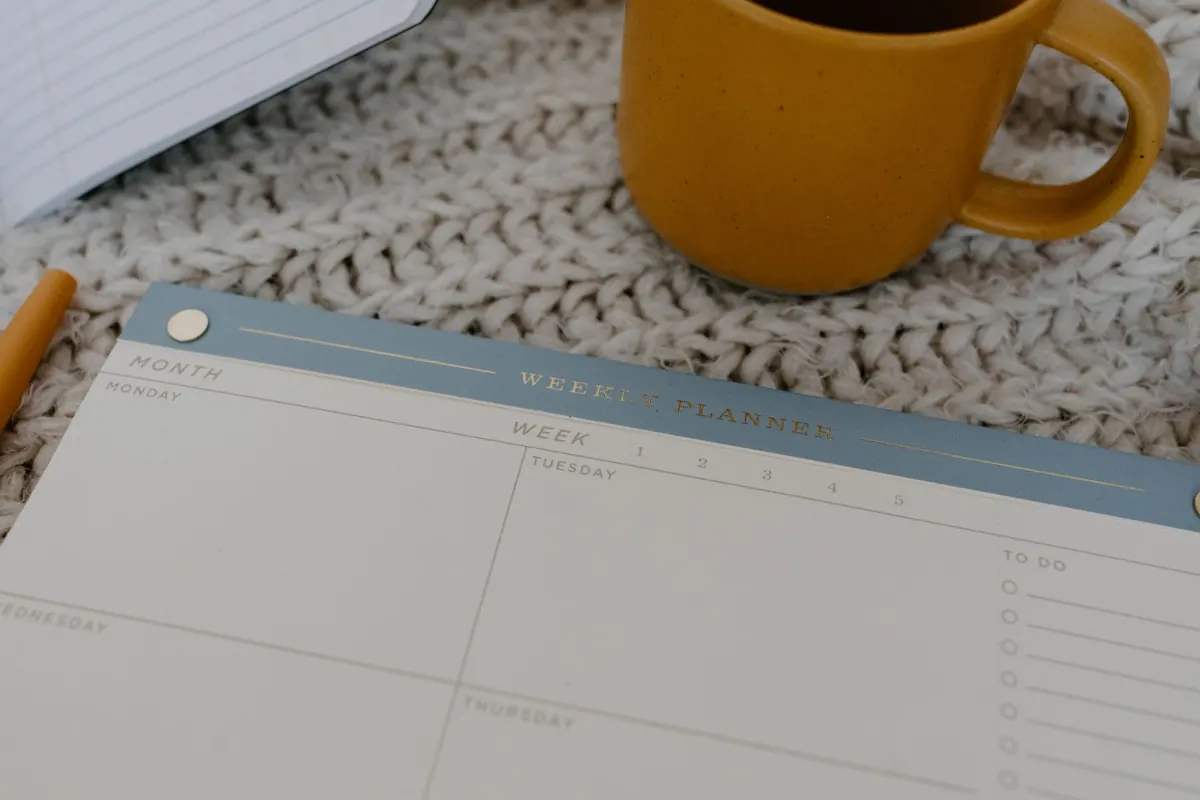
Sunday has an image problem. It is either a soft blur of duvets and roast dinners or a grim countdown to Monday morning, depending on your mood and how much ironing is stacked in the corner. Neither version is much use. A modest hour of gentle preparation on a Sunday afternoon changes the texture of the five days that follow — and it does not require a colour-coded planner or a personality transplant.
What follows is a checklist of twelve small moves. Treat it as a menu rather than a rulebook. Pick the six or seven that suit your life and leave the rest without guilt. The aim is not a perfect week. It is a week in which fewer things catch you out.
Why Sunday works, and why it needn't take all day
By Sunday afternoon the house has usually settled, messages have gone quiet and there is enough distance from Friday to think straight about what is coming. Monday morning is too late — that is when decisions get forced on you rather than made by you.
Budget an hour. Ninety minutes is generous. Anything beyond that tends to tip from preparation into a particularly joyless form of procrastination, where you reorganise the spice rack instead of answering the email you have been avoiding.
Reset the space you actually live in
- 1. Do a ten-minute sweep. Set a timer and walk through the main living space with a bag or a basket. Mugs to the kitchen, post to the drawer, stray chargers and cables back where they belong. You are not deep cleaning. You are removing visual noise so that Monday evening feels like somewhere you want to sit down.
- 2. Reset the launch pad. Every home has one — the chair by the door, the end of the kitchen worktop, the spot where your bag lands. Empty it, then restock it with what Monday needs: keys, headphones, umbrella, a reusable bag, anything waiting to be returned or posted.
- 3. Sort the laundry and lay out Monday's clothes. Run one load if there is one to run, and put away what is dry. Then choose tomorrow's outfit and hang it up. It is a two-minute decision now and a ten-minute scramble at 7.40am.
Open the diary before it opens you
Most weeks go wrong in the gaps, not the appointments. Twenty minutes with your calendar — paper, phone or wall planner — will show you where the pressure is coming from.
- 4. Read the week as a whole. Monday to Friday, start to finish. Look for the days with three things stacked back to back, the evenings that are already busy, and the mornings with an early start. Notice them now, while you can still move something.
- 5. Choose the two things that matter most. Not ten. Two. Write them somewhere you will see them on Wednesday, when everything feels urgent and nothing feels important.
- 6. Draft one difficult message. The awkward email, the rescheduling text, the reply you have been circling for a fortnight. Write it on Sunday while you are calm, and send it on Monday morning. Just the one. Doing all of them at once is how Sunday evenings turn sour.
Decide the food once, then stop thinking about it
Weeknight cooking goes wrong when the decision arrives at 6.30pm with everyone hungry. Take the decision away from that moment.
- 7. Name five dinners, not five recipes. Rough is fine: pasta something, something with rice, soup and bread, eggs, a tray of roasted vegetables. A list of names is enough to stop the takeaway reflex.
- 8. Shop from that list, once. Check the fridge and cupboards first so you are not buying a third jar of cumin. If heading to the shops on a Sunday is the last thing you want, book a Monday delivery slot instead.
- 9. Prep two things that make the rest easier. A pot of grains, a tray of chopped vegetables, a jar of dressing, or a batch of something that reheats properly. Two is plenty. Five is a recipe for a fridge full of sad Tupperware by Thursday.
Money and admin, kept strictly short
10. Give it fifteen minutes and a hard stop. Check what is due to leave your account this week, pay or schedule the one bill that needs it, and deal with the two pieces of post sitting on the side. Then close the laptop. If your finances are more complicated than a weekly glance — debt, tax, pensions, anything you are unsure about — speak to a qualified adviser rather than a checklist.
Prepare your mind, not just your schedule
- 11. Write two lines about how you want the week to feel. Not goals; a tone. "Leave the desk by six." "Ask before assuming." "Say no to the Thursday thing." Read it on Monday morning before you open your inbox.
- 12. Empty your head onto paper. Five minutes, no structure: everything unresolved, half-finished or nagging. Work worries, the dentist appointment you have not booked, the birthday you keep forgetting. Once it is written down it stops auditioning for attention at 3am.
Make the reset yours
The twelve items above are a template. Adjust them until they take less time than they give back, and be ruthless about which ones earn their place.
If you only have twenty minutes
Do three things: the ten-minute sweep, the five-minute brain dump, and laying out Monday's clothes. That combination alone will make Monday noticeably smoother.
If Sundays are already full
Move the reset. Friday after work works well for the diary and the food shop, because the week's details are still fresh in your mind. Saturday morning suits the home resets. Sunday evening can then be genuinely restful rather than quietly administrative.
Finish by protecting the last part of the day: an early-ish dinner, a screen-free half hour, and a reasonable bedtime. A calm week rarely begins with a tired Monday — and the person doing the preparing deserves some of the benefit.
Photo: Tara Winstead / Pexels