



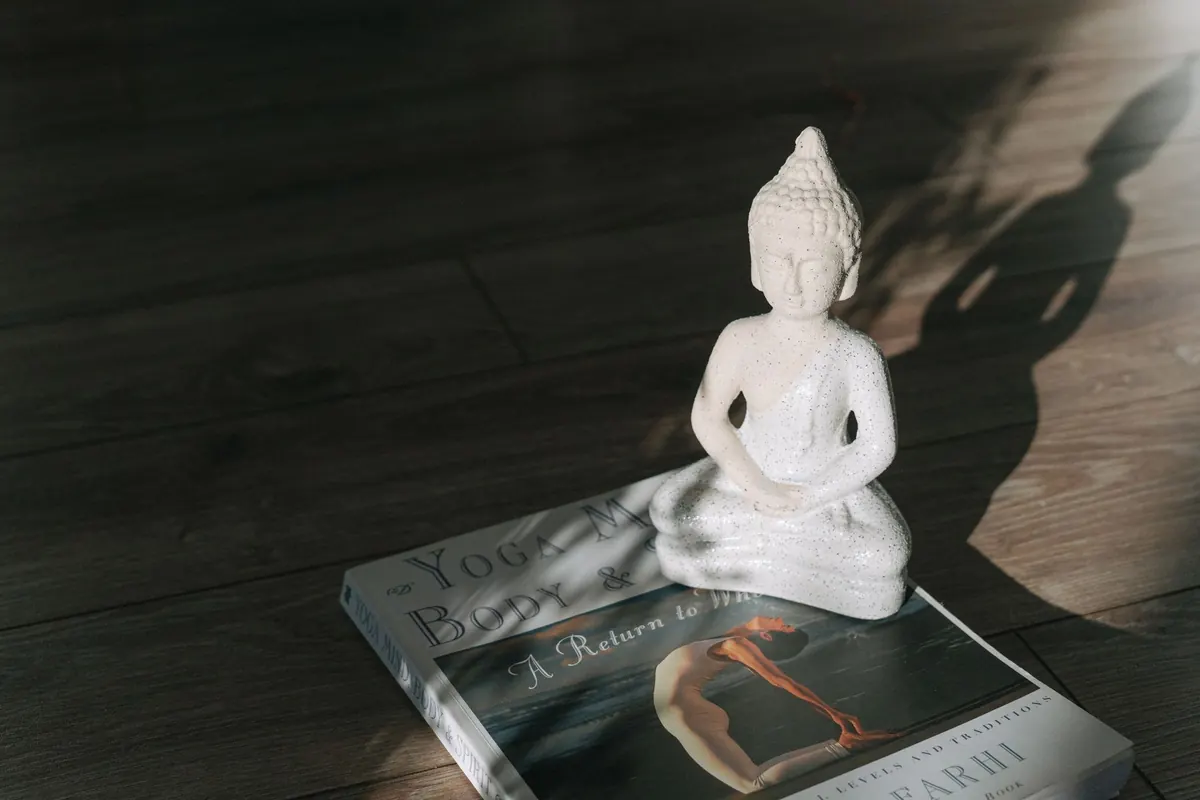

Two teachers, roughly four centuries and several thousand miles apart, reached a similar conclusion. Epictetus, a former slave who taught in Rome, and the Buddha, a prince who left his palace, both started with an uncomfortable observation: pain is part of being alive, and much of our extra suffering comes from how we meet it. Where they differ is just as interesting — and knowing which idea belongs to which tradition makes it easier to borrow the useful parts without swallowing the whole worldview.
Two routes out of the same trap
Stoicism began in Athens around 300 BCE and found its clearest voices in Seneca, Epictetus and Marcus Aurelius. Its central claim is psychological rather than mystical: events are not what disturb us, our judgements about them are. Money, health and reputation are preferred indifferents — pleasant to have, not the point. What matters is character: wisdom, courage, justice and temperance, applied to whatever is actually in front of you.
Buddhism starts from the Four Noble Truths, which describe suffering, its cause, its ending and the path between them. The cause named is tanha, usually translated as craving or thirst — the mind's habit of grabbing at pleasant experience and pushing away the unpleasant. The path is practical: ethical conduct, meditation and clear seeing, developed over years rather than understood in an afternoon.
Where they quietly agree
Strip away the metaphysics and the two overlap more than their reputations suggest.
- Both treat the mind's reaction, not the raw event, as the main place suffering is manufactured.
- Both are suspicious of chasing pleasure as a life plan, and of status as a measure of worth.
- Both insist on daily practice. Reading about either one changes very little.
- Both make kindness part of the training rather than a nice extra. Stoic justice means you owe other people something; Buddhist ethics begin with not causing harm and grow into compassion.
Where they part company
The Stoics believed the universe is ordered by a rational principle, and that living well means living in agreement with it. Buddhism requires no designer, and its cosmology includes karma and rebirth — a very different way of explaining why things happen to you.
They also disagree about the self. Stoicism assumes an agent who can choose, deliberate and improve. Buddhism's teaching of anatta, non-self, questions whether there is a fixed self to improve in the first place.
On emotion, the difference is subtler than the internet admits. Stoics do not aim to feel nothing; they aim to stop feeding destructive passions and to cultivate well-grounded feelings instead. Buddhist practice leans towards equanimity and compassion. Neither is an argument for becoming a robot, and if either sounds like emotional suppression, you have been reading the wrong version.
What to borrow from Stoicism
- The control audit. Write the worry down, then split it into two columns: what is up to me, what is not. Act on the first. Set the second aside deliberately, as a decision rather than a hope.
- Rehearsal. Briefly picture the loss you are quietly dreading — the missed deadline, the difficult conversation. It blunts the surprise without turning you into a pessimist.
- The virtue question. Before sending a hard reply, ask what a just, honest and calm response would look like. Send that one instead.
- The evening review. Three lines before bed: what went well, where I slipped, what I will do differently. No self-flagellation, just maintenance.
What to borrow from Buddhism
- Ten minutes of watching. Sit, follow the breath, and notice the moment a craving appears — the pull towards the phone, the second biscuit. Naming it loosens it.
- Impermanence as a fact, not a slogan. The mood, the argument, the ache in your back: weather, not climate.
- Craving versus intention. Wanting to finish your work is not the same as needing praise for it. Keep the first, watch the second.
- Loving-kindness for one irritating person. A few silent wishes for their wellbeing each day will do more for your peace than another round of being right.
A week-long experiment
Ideas about suffering stay decorative until you test them. Try this for seven days and see what shifts.
- Each morning, write down one thing you are worried about and mark it C for controllable or N for not.
- Spend ten minutes on the C items. Spend none arguing with the N items.
- Sit somewhere quiet for ten minutes. When your attention wanders, bring it back without grading your performance.
- Once a day, catch a craving before you act on it. Wait sixty seconds, then decide again.
- In the evening, three lines of review and one sentence of goodwill towards someone who annoyed you.
Keep the two or three that felt least like homework. That is usually the sign they suit your temperament rather than someone else's.
Keep what works, drop the rest
Stoicism is the better fit if you want a philosophy for work, duty and difficult decisions — it is brisk, unsentimental and always asks what you are going to do next. Buddhism is the better fit if the problem is the noise inside your own head, or a long habit of grasping at things that cannot hold you. Most people end up with a blend: the Stoic question in the morning, the Buddhist breath in the evening.
Neither tradition demands total commitment. Take the control audit and leave the cosmology; take the meditation and leave the rebirth. What matters is that the practice makes you a little less reactive this week than last.
One caveat worth stating plainly: if anxiety, low mood or grief is running your life rather than merely annoying it, these ideas work alongside proper help, not instead of it. Speak to your GP or a qualified mental health professional.
Photo: Ivan S / Pexels