



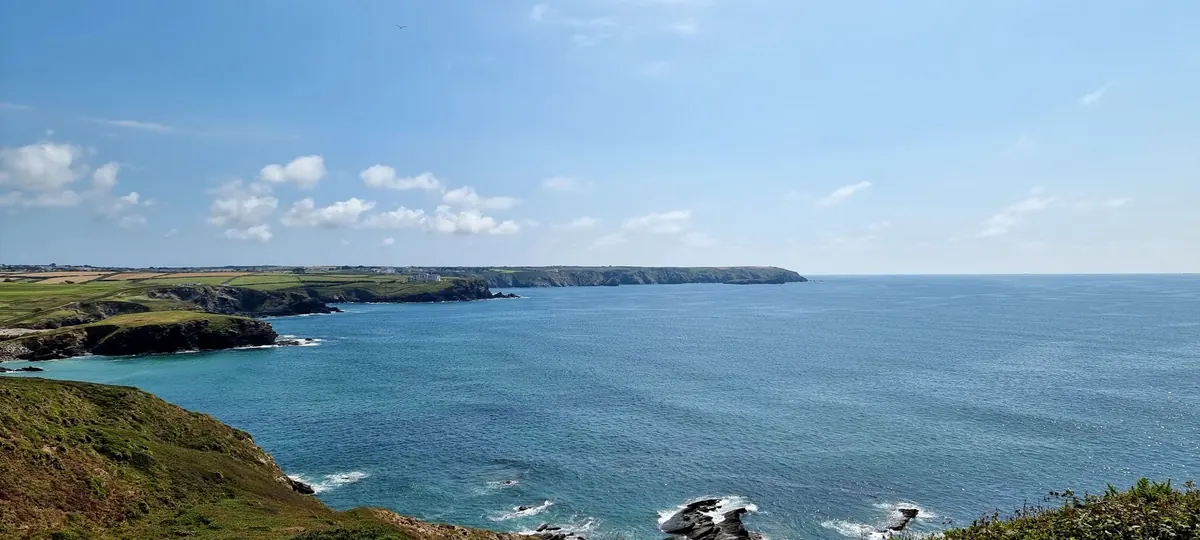
The first thing a coastal path does is slow you down. Not because it is difficult — though some stretches are — but because the ground keeps interrupting. Loose shale, a flight of steps cut into the cliff, a stile that needs both hands. Add the sound of water below and the wind pushing at your jacket, and you have conditions that make it almost easier to be present than to drift off.
Almost. Mindful walking is simply walking with your attention where your feet are. On the coast there is plenty for that attention to land on. This guide is for anyone who has never tried it: what to sort out before you start, how to pace yourself, how to breathe with the sea, and what to notice when the view is doing most of the work.
Sort the practicalities first
Attention is hard to hold when part of you is wondering whether the tide has turned or where the next exit from the beach is. Ten minutes of preparation buys you an hour of calm, so deal with the boring things before you set off.
- A tide table, printed or saved offline. Many coastal paths cross beaches, slipways and estuary mouths where the sea decides the route for part of the day.
- A forecast checked that morning, and a realistic idea of when the light goes. Winter afternoons in the UK end earlier than most people expect.
- Footwear with grip. Wet clay, seaweed and painted concrete are all slippery. Trainers are fine on a promenade, less so on a clifftop descent.
- Water, a snack, a warm layer. Sea air makes people colder and thirstier than they notice.
- A paper map or an offline map. Signal on the coast is patchy in the places you are most likely to need it.
- Someone at home who knows your route and roughly when you expect to be back.
If you are walking alone, stay on waymarked paths and keep away from the base of cliffs, where rockfall happens without warning. None of this is dramatic advice — it is just what lets you relax.
Walk slower than feels natural
Most people walk a coastal path at the speed of a commute. For a mindfulness practice, aim for roughly half your normal pace: slow enough that you can hear your own breathing over the wind, and that your footsteps land rather than clatter.
Try this rhythm. Walk the first ten minutes at your usual speed to warm up and settle. Then ease off deliberately and let your steps shorten. On a good surface, two to three kilometres an hour is plenty — a single mile in forty minutes gives you room to stop, look and start again without feeling you are falling behind.
A useful check: if you cannot comfortably say a short sentence without gasping, you are walking too fast for noticing. If you are so slow that you feel self-conscious, you are probably fine — keep going.
Breathe with the water
Do not turn your walk into a breathing exercise. The point is to let the coast set a rhythm you can borrow.
Stand somewhere safe with a view of the sea and watch three waves arrive. Then breathe in for three or four steps and out for five or six. A slightly longer out-breath is comfortable for most people and helps take the edge off a racing mind. If counting feels fussy, simply match your breath to the movement of the water in front of you: in as it draws back, out as it runs up the sand.
Two cautions. If you feel light-headed, stop counting and breathe normally — you have had enough. And if you have a heart or lung condition, are pregnant, or are recovering from illness, check with your GP before trying long breath counts outdoors on uneven ground. Gentle, unforced breathing is the aim; anything that feels like effort is missing the point.
Three ways to notice the landscape
Wandering attention needs something to come back to. These three practices take a few minutes each and work on any coast path.
- The sound map. Stop and stand still for one minute. Find the closest sound, then one a little further away — gulls, a dog, a buoy clanging — then the furthest you can hear. You have just drawn a map with your ears, and it will be different at every point on the path.
- The three-breath stop. Every fifteen minutes or so, pause at a safe spot. Take three slow breaths, then name three things you can see: a particular colour of lichen, a fishing boat, the way the light sits on a wet rock. Naming is what turns looking into noticing.
- Up, down, out. Look up at the sky for a few breaths, down at the ground beneath your feet, then out to the horizon. It is a simple way to remember you are standing in a landscape rather than walking through a picture.
When your mind wanders, and it will
Noticing that you have spent ten minutes rehearsing a work conversation is not a failure. It is the practice working. Label it quietly — planning, worrying, listing — and come back to the physical sense of your feet on the path. The soles of your feet are a reliable anchor because they are always in contact with something.
Weather is not an interruption either. Rain on a waterproof hood, cold air in your lungs, wind pushing you sideways on an exposed headland: all of it is sensation, and sensation is exactly what you came for. If conditions turn genuinely unpleasant or unsafe, take that as information, turn around and walk back. A shortened walk you enjoyed beats a long one you endured.
Pick a gentle stretch for your first attempt
You do not need a long-distance path. A village promenade, a flat section of the Norfolk Coast Path, an estuary path at low tide, or a wide beach with firm sand all work better for a beginner than an exposed cliff edge with big drops and steep steps. Save the dramatic sections for when the habit is established.
An hour is plenty. Go out and back on the same stretch rather than planning a loop, so you are never thinking about navigation instead of walking. In summer, early morning and late evening give you quieter paths and better light; in winter, start earlier than you think you need to.
Your first mindful mile
Here is a simple plan you can use this weekend.
- Choose a stretch of coast you can reach easily, about a mile long.
- Check the tide and the forecast. Tell someone where you are going.
- Walk out for twenty minutes with your phone in your pocket. No photographs yet.
- Stop three times: once for the sound map, once for the three-breath stop, once simply to sit and watch for five minutes.
- Walk back at your normal pace and let your mind do what it likes.
- Finish with tea somewhere warm if you can. It marks the end of the practice.
Then do it again next week, on the same path, in different weather. Repetition is what turns a pleasant afternoon into something steadier — a place your attention knows how to find. The sea will do the rest.
Photo: Abdullah Faruque / Pexels